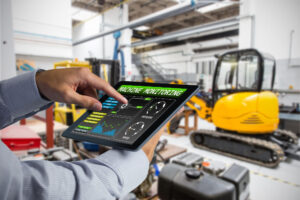
Complex systems at the heart of today’s digital transformation pose new challenges for managing critical business processes. Sectors such as transportation, energy, and telecommunications are seeing exponential growth in the volume of data generated and shared, with significant impacts on the design and implementation of increasingly pervasive and integrated sensor networks and networking systems.
Real-time connectivity between multiple nodes distributed across the territory is crucial for enabling advanced monitoring, control, and resource optimization capabilities in various areas. Only through architecture-centric approaches that place infrastructure at the center can we best manage the complexity of highly variable scenarios and an ever-growing number of critical business processes.
Therefore, investing in the logical and physical design of networks capable of supporting large amounts of bidirectional traffic, with high performance and reliability, becomes strategic. The implementation of 5G networks, IoT systems, edge computing solutions, and hybrid clouds represent some of the major innovations underway to enable a connected and decentralized model of data acquisition and exchange. The goal is to provide companies with a constantly updated view of the operating context, which is essential for optimizing business processes with a predictive approach and continuous business efficiency.
Critical Business Processes and Railway Network Monitoring
The critical business processes related to railway infrastructure management are extremely complex to monitor, given the large number of parameters involved that influence the entire rail transport system. An infrastructure manager, having to guarantee access to its network for railway companies, manage maintenance, and ensure the safe circulation of trains, must interface with multiple entities and constantly coordinate multiple operational flows.
Therefore, it is strategic to develop advanced technological systems for near-real-time monitoring of all key indicators related to the status of the network, such as train position, transit speed, any anomalies, and travel times. Only through the systematic collection of this up-to-date information is it possible to optimize the design of control systems and the planning of activities necessary for the safe and punctual operation of the service.
Indeed, train position, speed, anomalies, and travel times represent critical business processes for railway infrastructure management and are essential to constant monitoring. Position and speed are essential for managing train spacing and preventing potential accidents. Any anomalies detected also directly impact the regularity and safety of traffic, while travel times influence the overall punctuality of the service.
An advanced network monitoring system, therefore, relies on a widespread network of sensors to track all these key parameters in real time. The collected data must then be fed into digital platforms capable of providing a complete and up-to-date operational view of traffic, thus allowing designated personnel to supervise train operations, detect any critical issues, make adjustments to traffic planning, and optimally manage unforeseen events to maximize infrastructure efficiency.
Only through the systematic collection of this up-to-date information is it possible to optimize the design of control systems and the planning of activities required for the safe and punctual operation of the service.
The continuous exchange of data with railway companies is also essential for managing critical processes related to toll invoicing and penalty calculations, in order to verify compliance with contractual terms and the quality of service provided to users. Therefore, real-time monitoring of infrastructure and traffic flows is now essential for optimizing the efficiency and reliability of the railway sector as a whole.
Critical Business Processes and Monitoring of Energy Distribution Networks
The critical business processes involved in managing electricity distribution networks are extremely complex to monitor and control. Companies operating in the sector must guarantee the continuous flow of energy, ensuring the highest levels of service reliability and efficiency. To this end, developing advanced systems for monitoring network infrastructures is crucial. Real-time monitoring of parameters such as the operating status of generation plants, user demand, and the integrity of lines and components is essential to preventing failures and disruptions. Only through the systematic acquisition of this up-to-date information is it possible to design advanced control solutions.
Digitizing all phases of the network lifecycle, from planning to intervention management, allows for improved allocation of technical and human resources. Particular attention is paid to the development of monitoring and control solutions for vulnerable areas, such as primary and secondary substations, with automated reporting and predictive approaches based on big data analysis. An integrated and systematic approach to real-time performance data collection is a key element in managing the critical business processes associated with the distribution of an essential service such as electricity.
Critical Business Processes and Mobility Network Monitoring
Managing mobility networks involves extremely complex business processes, as it is necessary to monitor and manage constantly evolving flows to ensure efficient connections throughout the territory. Operations control personnel must be able to quickly access all the data stored in the IT systems that regulate the operation of transport services. Information such as real-time vehicle locations, transit schedules, infrastructure status updates, and communications with users must be accessible through cutting-edge systems.
Consequently, the hardware and software components of operations rooms play a crucial role. They must ensure a comprehensive view of the network at all times by integrating multiple databases. Only through the systematic collection and real-time sharing of a wide range of data is it possible to manage the critical business processes related to urban and infrastructure mobility.
High-performance solutions and data centers are therefore essential for providing unlimited access to operational databases, facilitating effective and timely decisions. The installation and updating of complex IT systems must also be able to ensure the full functionality of monitoring, control, and reporting systems to avoid compromising service levels.