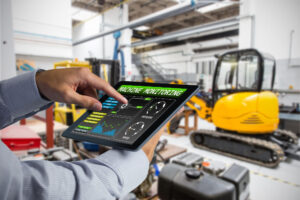
The Industrial Revolution 4.0 represents a momentous turning point in the history of global manufacturing. From the first mechanical loom in the 18th century to contemporary cyber-physical systems, technological evolution has followed a path of progressive integration between physical and digital processes. Traditional network infrastructures, designed in the pre-digital era, now face unprecedented challenges: exponentially growing data volumes, increasingly stringent real-time requirements, and constantly evolving cybersecurity threats.
The World Economic Forum estimates that by 2030, over 70% of industrial assets will be connected, generating a potential economic impact of $14.2 trillion globally. This hyperconnectivity requires a radical transformation of data processing and transmission architectures, moving away from centralized models toward distributed paradigms. Communication latencies are becoming the critical bottleneck in areas such as advanced automation, where milliseconds mean the difference between optimal processes and systemic inefficiencies. In this scenario, Edge Computing emerges as an architectural response to the needs of delocalized processing, redefining the very concept of the industrial network.
Business competitiveness in the next decade will increasingly depend on the ability to implement resilient, adaptive, and high-performance digital infrastructures. Companies that fail to adopt these enabling technologies risk finding themselves at a significant competitive disadvantage, with an estimated productivity gap of between 15% and 35% compared to industry leaders.
What is Edge Computing and Why is it Essential in Industry
Edge Computing represents a computing paradigm that moves data processing closer to the source of data generation, rather than relying exclusively on centralized data centers or remote clouds. This distributed architecture allows data to be processed directly on edge devices or on local servers located near the sensors and machines that generate the information.
Unlike traditional cloud computing, where all data is sent to geographically distant centralized servers, the edge approach significantly reduces latency and bandwidth consumption, critical factors in industrial applications where response time is a key factor. Decisions are made more quickly, sometimes in milliseconds, a time span that in production settings can mean the difference between a safe operation and a potential incident.
In industrial environments, edge computing is essential for several reasons. Business continuity is guaranteed even in the event of internet connectivity interruptions, as edge systems continue to function autonomously. Transmission costs are significantly reduced when only relevant data is sent to the cloud, while less critical information is processed and stored locally.
Security is another key advantage. Sensitive data remains within the company perimeter, minimizing the risks associated with transmission over public networks. Energy efficiency is significantly improved, a significant advantage in an era of growing concern for environmental sustainability.
Edge computing applications in industry range from predictive maintenance to real-time quality control, from advanced robotics to automated safety systems. Enabling technology includes specialized hardware, such as industrial gateways, and software optimized to process large volumes of data in environments with limited computational resources.
The implementation of edge solutions fits perfectly with the principles of Industry 4.0, facilitating the integration between physical and digital systems and enabling the emergence of smart factories capable of dynamically adapting to operating conditions. The industrial edge technology market is experiencing annual growth rates exceeding 15%, demonstrating the rapid adoption of this approach in corporate digitalization strategies.
Edge Computing and Industrial Switches: A Winning Combination
Industrial switches are the core of the communications infrastructure in manufacturing. These networking devices differ from commercial models due to their mission-critical characteristics. Designed to operate in harsh environments, they are resistant to vibration, extreme temperatures (-40°C to +85°C), mechanical shock, and electromagnetic interference. Their technical specifications include compliance with industrial standards such as IEC 61850 and IEEE 1588 for precise time synchronization, and advanced redundancy protocols such as HSR (High-availability Seamless Redundancy) and PRP (Parallel Redundancy Protocol).
Ultra-low latency is the key factor in this combined architecture. Latest-generation industrial switches guarantee switching times of less than 10 microseconds, allowing edge systems to receive and process data in near-real time. Dedicated bandwidth, often configured with Quality of Service (QoS) technologies, ensures that critical information always receives top priority in network traffic.
Industrial switches are the ideal infrastructure for edge computing for several technical reasons. Advanced network segmentation through industrial VLANs allows for the isolation of operational and administrative traffic, increasing overall security. Specialized routing protocols optimize communication paths between distributed edge nodes, while deep packet inspection capabilities identify and block potential threats before they reach control devices.
Expertise and Practical Applications in Industrial Networking
In terms of reliability, industrial switches implement redundant ring topologies and automatic failover mechanisms that ensure operational continuity even in the event of physical network interruptions. This feature is essential considering that industrial edge applications control production processes where downtime can cost thousands of euros per minute.
The design and implementation of industrial networking systems requires specific skills to optimize the interaction between edge and switching. Parameters such as infrastructure scalability, compatibility with legacy industrial protocols (Modbus, Profinet, EtherNet/IP), and centralized manageability are critical success factors.
Carefully planning the placement of switches in relation to edge nodes minimizes connection distances, further reducing latency and signal attenuation issues.
The practical applications of this technological synergy are found in various sectors: from manufacturing automation with artificial vision systems for quality control, to smart energy grids with distributed monitoring, to critical infrastructures such as water treatment plants, where the combination of local processing and reliable communication ensures high standards of operational safety.
The convergence of IT (Information Technology) and OT (Operational Technology) finds its maximum expression in the combination of Edge Computing and industrial switches, creating a resilient, high-performance technological infrastructure ready to face the challenges of Industry 4.0 and beyond.