Communications networks play a vital role in critical infrastructures such as industrial plants, power grids, and transportation systems. Ensuring resilient and reliable connectivity is essential for these areas, where even brief interruptions can have disastrous consequences. In the past, communication networks were primarily built with copper, a reliable technology but subject to electromagnetic interference and with limited transmission capacity. Today, fiber optics are the standard for performance, security, and scalability. However, even the best optical networks can experience service interruptions due to accidental damage, natural events, or malicious acts. For this reason, operators implement redundant architectures capable of ensuring operational continuity even in the event of a primary link failure.
Fiber optic bypasses are a proven solution for creating physically independent and logically redundant paths. These optical bypasses can automatically route traffic onto an alternative path in the event of a failure, minimizing the impact of the interruption. Properly designing fiber optic bypasses requires specific expertise to ensure maximum network resilience. Experienced specialists can plan physically and geographically distinct bypasses and optimally configure equipment.
Industrial Fiber Optic Bypasses: What are they and why are they essential?
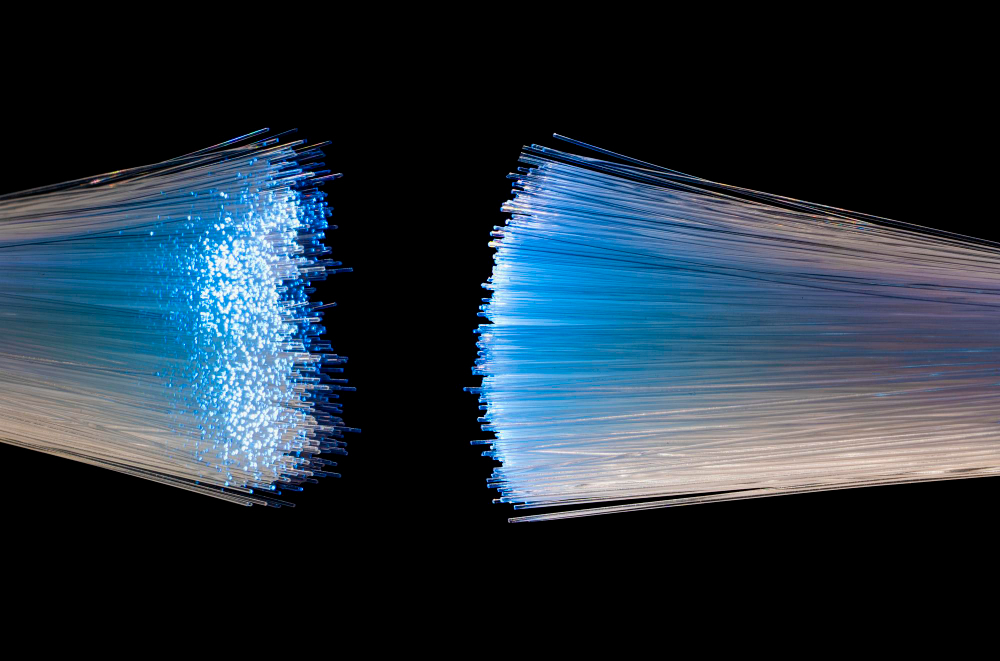
Industrial fiber optic bypasses are fiber optic cabling systems used in industrial plants to connect machinery, sensors, and control devices. Fiber optics offer numerous advantages over traditional copper cabling: they are immune to electromagnetic interference, have very low signal loss even over long distances, and are intrinsically safe since the light is confined within the glass cable and does not generate sparks.
For these reasons, fiber optic bypasses are essential in critical industrial applications such as power plants, refineries, chemical plants, mines, and ATEX-classified areas where potentially explosive atmospheres exist. In these environments, traditional copper systems can cause sparks and thus trigger explosions. Fiber optic bypasses eliminate this risk by ensuring secure communications between the various components of the system
The design and implementation of fiber optic networks for industrial applications requires special precautions. First, cables must be armored and reinforced to withstand the mechanical, chemical, and thermal stresses typical of industrial environments. Connectors and other components must also be suitable for use in critical environments.
Network implementation is complex and requires specific expertise. Careful planning is essential to identify the best cable routing and strategic locations for patch cabinets. Particular care must be taken with fiber optic splicing and termination, delicate operations that affect the performance of the entire system.
Fiber optic bypasses must be tested and certified to ensure adequate performance standards. Instruments such as optical reflectometers, power meters, and spectrum analyzers are essential for qualifying and documenting the fiber optic network. Proper design, installation, and maintenance are essential to fully exploit the benefits of fiber optics in industrial plants.
Fiber Bypass: Examples of Use in Critical Environments: From the Energy Sector to Manufacturing
In the energy sector, fiber optic bypasses are widely used in power plants, primary substations, transmission facilities, and substations. Fiber optics replaces traditional copper wiring to control switches, protection devices, sensors, and actuators. Signals are transmitted without the risk of triggering electrical arcs or explosions
In refineries and chemical plants, fiber optic bypasses are also essential. Control and automation equipment is interconnected via intrinsically safe optical networks. Fiber cables do not cause sparks and can even be installed in ATEX-classified areas.
In the extractive industries, such as mines and quarries, the use of fiber optics prevents the risk of explosions due to sparks on cables. Sensors, cameras, lighting, and communication systems are connected with robust and reliable optical networks.
In manufacturing, fiber optic bypasses are also increasingly widespread. Various types of industrial machinery are interfaced and monitored remotely via fiber optic connections, eliminating electromagnetic interference on signals. Fiber optics ensures fast communications for real-time production control.
For critical applications such as elevators, subways, cable cars, and cranes, optical cables provide secure connections between sensors and control systems. Networks can be designed with redundancies and alternative paths to ensure connectivity even in the event of a failure.
Thanks to its inherent immunity to interference and security, fiber optics is increasingly used for the design and implementation of resilient networks in the most critical industrial environments. The proper design and installation of these systems requires specific expertise.