IoT platforms play a strategic role in the remote monitoring sector, enabling integrated and scalable solutions that deliver significant benefits for businesses, institutions, and organizations. Accurate data acquisition from monitored devices, in-depth analysis, and timely notification of problems and anomalies are the key capabilities of these platforms, which significantly improve decision-making and operational optimization.
Thanks to IoT remote monitoring solutions, companies can achieve significant cost savings through reduced field visits and spare parts consumption, as well as benefit from longer equipment life and reduced downtime. These benefits, combined with increased customer satisfaction, make IoT remote monitoring an essential tool in various sectors, such as industrial. The creation and design of smart IoT platforms plays a crucial role in enabling these advanced capabilities, enabling the creation of customized, integrated, and scalable IoT solutions for the remote monitoring and management of devices and systems.
IoT Platforms: Monitoring Architecture
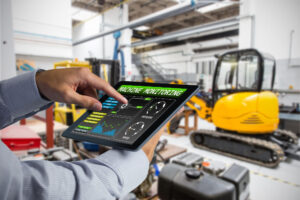
IoT remote monitoring and the use of Internet of Things (IoT) technology to remotely monitor and manage devices or systems allows for near-real-time tracking and monitoring of various parameters such as temperature, pressure, current, voltage, and humidity.
Original equipment manufacturers (OEMs), service companies, and individuals can remotely monitor their assets, equipment, and systems with IoT remote monitoring from anywhere in the world, using a simple mobile device or computer. The IoT remote monitoring system relies on accurate data from assets in the field. The smarter the remote device and the more sensors it has, the better the remote diagnostics and support will be.
The IoT system begins with software that acquires data from the remote asset, which is then analyzed to identify and evaluate key operating parameters. Finally, the system must notify users of devices with problems, describing them and indicating the probable cause/solution. The value of IoT remote monitoring lies in its ability to provide valuable insights and actionable information that leads to significant improvements in decision-making and operational optimization.
By using IoT remote monitoring, companies can achieve significant cost savings over time by reducing spare parts consumption and field interventions. This also helps improve equipment lifespan, reduce downtime, and increase customer satisfaction. IoT system design and implementation plays a key role in enabling IoT remote monitoring and its key capabilities. This allows for the creation of customized, scalable, and integrated IoT solutions for remote monitoring and management of devices and systems across a variety of application sectors.
IoT Platform: Key Features of IoT Platforms for Monitoring
IoT platforms are therefore useful for remote monitoring thanks to their key features:
1.Data Acquisition: The IoT system begins with software that acquires data from the remote asset, gathering accurate information from sensors installed on the monitored devices or systems. The smarter the remote device and the more sensors it has, the better the diagnostics and remote support will be.
2.Data Analysis: The acquired data is then analyzed to identify and evaluate key operating parameters, such as temperature, pressure, current, voltage, and humidity. More advanced analyses can also examine multi-variable relationships and identify trends through historical analysis.
3.Notification and Alerts: Once processed, the data is used to notify users of problems detected on monitored devices, describing their characteristics and, where appropriate, suggesting the causes and most appropriate solutions.
These key capabilities of IoT platforms provide valuable insights and actionable information, significantly improving decision-making and operational optimization for remote monitoring activities. Thanks to these capabilities, companies can achieve cost savings, reduce downtime, and increase customer satisfaction.
The design and implementation of IoT solutions therefore serves to enable these key capabilities of IoT platforms and create efficient and effective remote monitoring systems.
IoT Monitoring: Use Cases for Smart Platforms
IoT platforms have numerous applications in various sectors, such as healthcare, industrial, high-tech, and agriculture, representing an essential tool for companies seeking to improve the efficiency of their operations. One of the primary use cases for smart platforms for IoT remote monitoring is healthcare.
The Internet of Medical Things (IoMT) enables the integration of medical devices and technologies with the internet and other digital platforms, allowing remote technicians to access devices anywhere in seconds. This was particularly useful during the COVID-19 pandemic, when many service assessments were conducted remotely. In the industrial sector, IoT remote monitoring is essential for manufacturers of large machinery installed in critical applications and remote locations.
Remote connectivity and access to operational data are crucial for accurate diagnosis and effective repairs without having to physically dispatch a technician. Furthermore, the data collected can be used to trigger preventive and condition-based maintenance alerts. In the fleet management sector, IoT remote monitoring has also become an essential tool, enabling near-real-time tracking of vehicles and assets. Sensors and GPS tracking provide valuable data on vehicle location, performance, fuel consumption, driver behavior, and maintenance needs, enabling fleet managers to make informed decisions to optimize operations and improve safety.
Overall, the value of IoT remote monitoring lies in its ability to provide valuable insights and actionable information that significantly improve decision-making and operational optimization. By designing monitoring systems, companies can achieve cost savings by reducing spare parts consumption and field interventions, while mitigating the risk of equipment failure through early detection of potential problems or inefficiencies.