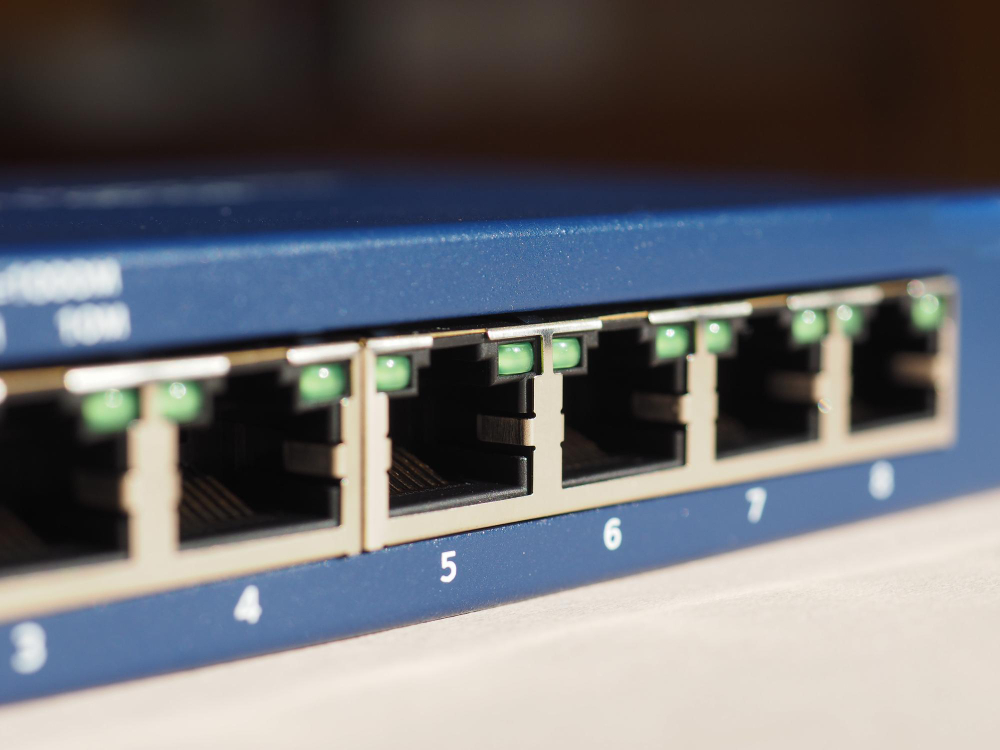
The efficiency and reliability of network infrastructures are crucial for modern businesses. Cutting-edge technologies overcome the limitations of traditional systems, providing tangible benefits in terms of performance, simplified installation, and reduced operating costs. PoE extenders play a strategic role in extending connectivity and power beyond previously unimaginable boundaries, enabling innovative and resilient network solutions.
PoE Extenders: What are they and how do they work?
PoE extenders are network devices that extend a PoE (Power over Ethernet) signal over long distances. PoE is a technology that allows data and power to be transmitted over a single Ethernet cable. However, due to signal attenuation, PoE has a limited range over copper cables, typically around 100 meters. PoE extenders allow this distance to be extended by connecting to a PoE switch and regenerating the signal, thus allowing PoE-powered devices located up to 300-400 meters away.
They work by receiving the PoE signal from a switch on one side, regenerating it, and retransmitting it cleanly on the other side to the powered device. This way, they can extend the effective range of the PoE. PoE extenders are essential components in many IP network installations that involve the use of surveillance cameras, VoIP phones, and WiFi access points powered by PoE but located far from the switches.
They are therefore an excellent solution for expanding the potential uses of PoE technology and simplifying the cabling and powering of network devices, even at great distances from rack cabinets. They are highly versatile and easy to install, integrating seamlessly into any existing network infrastructure. PoE extenders are excellent networking solutions that solve many problems related to the installation and management of PoE-powered devices.
Coax vs. UTP: A Comparison of Technologies
Coaxial cable and UTP cable are two different cabling technologies commonly used in telecommunications and IT networks. Coaxial cable consists of an internal copper conductor surrounded by a conductive shield and finally covered by an insulating sheath. This particular structure provides shielding and immunity to electromagnetic interference. Coaxial cables are primarily used for cabling cable TV networks, video surveillance networks, and for connecting antennas.
They offer excellent performance up to 1 GHz. UTP (Unshielded Twisted Pair) cable is made up of eight copper wires twisted into pairs. It is the most common type of cable in Ethernet networks and is unshielded. Category 5e and 6 UTP cables can support applications up to 1 Gigabit Ethernet and are very versatile and easy to install. However, they are more susceptible to electromagnetic interference than coaxial cables. When designing and building networks, the choice between coaxial and UTP depends on the application. For distributing the signal to TV sockets, coaxial is preferred. For data networks, UTP cable is the standard.
PoE Extenders: Benefits for Long-Range Networks
PoE extenders offer significant advantages in the design and implementation of resilient, long-distance wired networks. PoE (Power over Ethernet) is a technology that allows data and power to be supplied over Ethernet cables, but its range is limited by signal attenuation. PoE extenders overcome this limitation by regenerating the signal and transmitting it cleanly for up to 300-400 meters.
Using PoE extenders significantly simplifies the wiring of devices such as IP cameras, VoIP phones, and Wi-Fi access points located far from switches. It eliminates the need to install dedicated electrical outlets, reducing time and costs. In particularly large environments such as industrial warehouses, PoE extenders are essential for providing reliable connectivity wherever it’s needed.
They enable the creation of resilient and redundant wired networks thanks to the ability to position switches at strategic intermediate points. PoE extenders are therefore a key component in the design and implementation of reliable, high-performance wired networks over long distances, simplifying cabling and powering devices even in critical locations. Their ability to regenerate the PoE signal makes them indispensable for large and resilient wired networks.