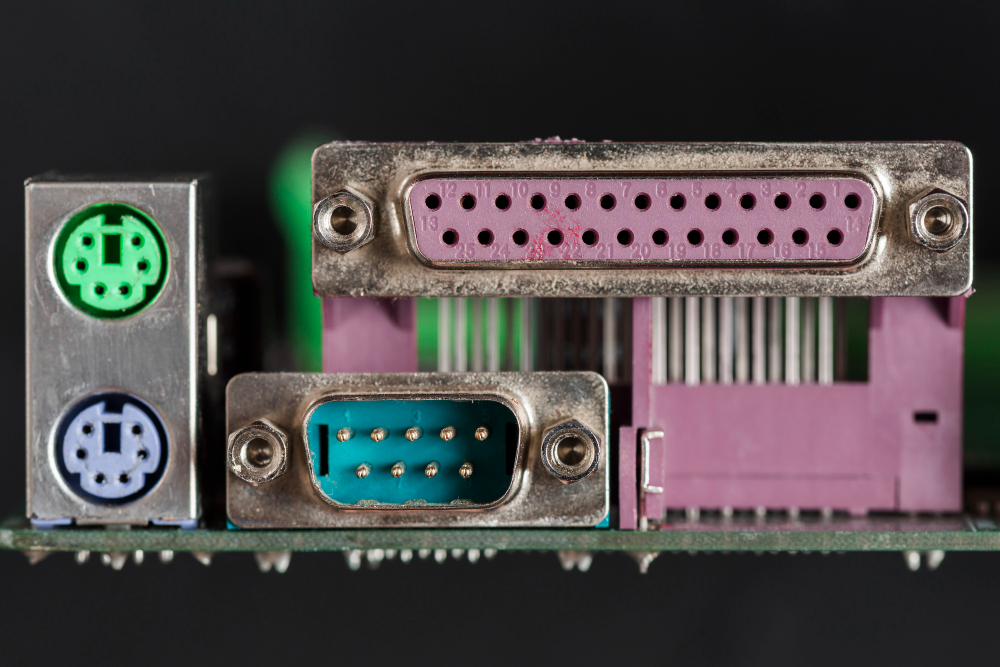
Communication between electronic devices has always played a crucial role in computing. To enable efficient data exchange between heterogeneous systems, universal interface protocols and standards have been developed since the dawn of time. Among these, serial interfaces, which transmit bits sequentially through a dedicated communication channel, hold a prominent place. Thanks to their simplicity and versatility, serial interfaces have long been the backbone of digital connectivity, from the first modems to modern embedded systems. Despite their limitations, serial standards continue to play a key role in many applications.
Serial Interface: What are they and why are they still relevant?
Serial interfaces are types of connections used to transfer data between peripherals and computers. Although serial standards have been largely replaced by USB and other technologies, serial interfaces are still widely used in many contexts.
One reason serial interfaces remain relevant is their simplicity and cost-effectiveness. Serial protocols require only a few wires to transfer data and are relatively easy to implement. Furthermore, many embedded devices still have built-in serial ports. This means that communicating with these devices requires a serial connection.
In industrial and scientific settings, serial interfaces are still widely used to control machinery, sensors, and other equipment. The most common serial standards in this field are RS-232, RS-485, and RS-422. These serial interfaces are robust and reliable even in harsh environments with electrical noise or vibration. Furthermore, many industrial protocols, such as Modbus RTU, rely on serial connections.
Serial interfaces also play a fundamental role in networking. Many network devices, such as routers, switches, and firewalls, are equipped with serial console ports for configuration and debugging. Serial connections allow secure and reliable access to devices even when the network is isolated or malfunctioning. One example is the design and implementation of resilient networks.
Although technologically superseded by newer standards, serial interfaces continue to be widely used due to their simplicity, cost-effectiveness, and reliability. Their importance remains fundamental in industrial and scientific settings, and in some networking solutions. As long as many devices continue to integrate serial ports, this interface technology will remain relevant in many applications. Serial interfaces are essential for data transfer between computers and peripheral devices. The main serial standards include RS-232, RS-422, RS-485, and USB.
RS-232, RS-485, and other existing serial interface types
RS-232 is the most widely used serial interface. Developed in the 1960s, it allows point-to-point communication over short distances of up to 15 meters. It is typically used to connect modems, printers, and other legacy peripherals.
RS-422 and RS-485 are more recent serial interfaces designed for industrial environments. RS-422 allows balanced differential transmission over distances of up to 1.2 km. RS-485 allows multipoint connections of up to 32 devices up to 1200 meters apart thanks to the use of differential drivers and receivers.
USB is a serial standard introduced in the 1990s that uses a host-peripheral bus for high-speed data, audio, and video transfer. The most common form is USB 2.0 High Speed (480 Mbit/s). The latest version, USB4, can reach 40 Gbit/s.
In addition to these main standards, there are niche serial interfaces such as MIDI, used in music, SPI and I2C in the embedded world, and GPIO in the Raspberry Pi. Although less common, each of these serial buses addresses specific needs in certain application contexts.
Serial Transmission: Advantages and Limitations of Serial Interfaces Compared to Other Technologies
Serial transmission is a communication technology between devices that sends data bits sequentially over a communication channel. The most common serial interfaces are RS-232, USB, and Ethernet.
The advantages of serial connections include simplicity and low cost. Few wires are needed, making them inexpensive to implement. Serial transmission is also easy to manage and does not require complex timing circuits. Finally, serial standards are universal and widely supported.
However, serial interfaces also have limitations compared to newer technologies. Data transfer speeds are lower. For example, USB 2.0 reaches 480 Mbps while Ethernet reaches 1 Gbit/s. Furthermore, the maximum distance is limited, typically a few meters for USB and RS-232. Finally, serial interfaces do not handle the simultaneous transmission of large data streams well.
Compared to parallel buses like PCI Express, serial connections are slower at transferring data. However, PCI Express requires more power lines, making it more expensive to implement. Compared to wireless interfaces like WiFi and Bluetooth, serial interfaces offer greater reliability and less interference, even though they only connect nearby devices. Wireless interfaces, on the other hand, allow for long-range wireless connections.