Transforming the primary sector represents one of the greatest global challenges today. With the world population projected to reach 9.7 billion by 2050, food production will need to increase by 70% while natural resources are progressively depleting. The traditional agricultural model, developed during the Green Revolution of the 1960s, now faces clear limitations in terms of sustainability.
The technological convergence of information technology, robotics, and biotechnology is redefining the very concept of cultivation. Smart agriculture emerges not only as a response to these pressures, but as an opportunity to completely redesign the relationship between human activities and natural ecosystems, in a context where production efficiency must necessarily be combined with environmental resilience.
Agritech: Hybrid Networks for Environmental and Crop Monitoring
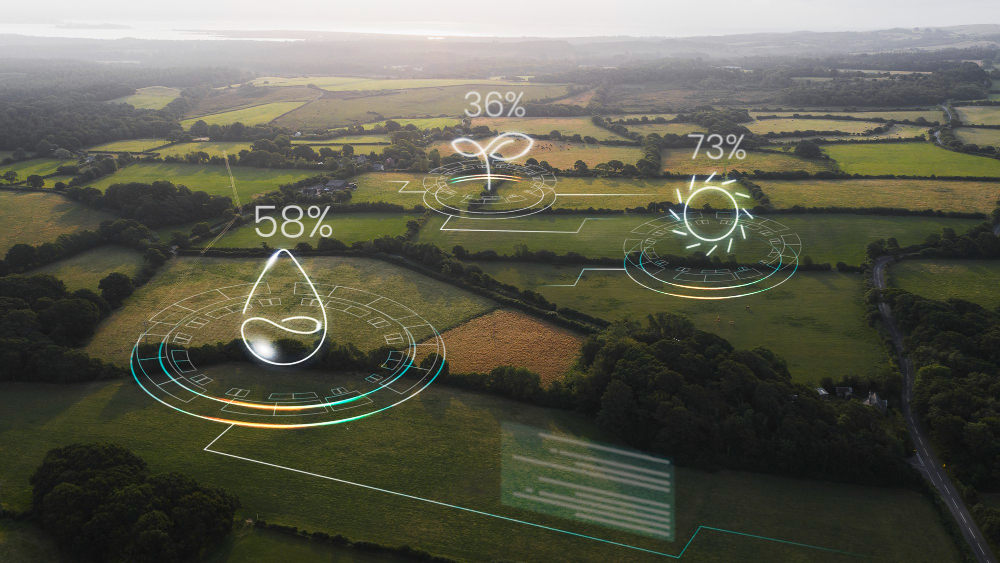
The agricultural sector is undergoing a profound digital transformation thanks to the implementation of advanced technologies that enable precise monitoring of environmental conditions and crop status. Hybrid networks represent one of the most significant innovations, combining different communication technologies (wireless, satellite, and cellular) to ensure optimal coverage even in isolated rural areas. These integrated systems collect data from sensors distributed throughout the fields that measure crucial parameters such as soil moisture, temperature, nutrient levels, and the presence of pathogens.
IoT solutions applied to agriculture enable the transmission of this data to centralized platforms where it is processed using predictive algorithms that provide precise guidance to farmers. The benefits are numerous: irrigation optimization, targeted fertilizer application, plant disease prevention, and accurate scheduling of field activities. Continuous data collection also allows for the creation of forecasting models that help address increasingly frequent extreme weather events. Smart agriculture resulting from these technological implementations significantly reduces the environmental impact of agricultural activities, with documented water savings of up to 30% and reductions in the use of chemicals of up to 25%.
Hybrid networks also offer significant advantages in terms of operational resilience, as the diversification of communication technologies minimizes the risk of service disruptions even in challenging environmental conditions. The global agritech market is rapidly expanding, with forecasts indicating a value of $22.5 billion by 2026 and an annual growth rate of 12%. This evolution responds to the pressing need to increase agricultural productivity to feed a growing world population, while maintaining environmental sustainability and adaptability to ongoing climate change.
Smart Agriculture: Environmental Challenges and Long-Term Solutions
Contemporary agriculture faces critical environmental challenges: climate change, water scarcity, soil degradation, and biodiversity loss. These issues require innovative solutions that can ensure food security without further compromising ecosystems. Digital technologies offer concrete tools to address these challenges, enabling a more precise and sustainable approach to agricultural production.
Smart IoT systems are at the heart of this agricultural revolution, providing accurate data on environmental and production parameters through networks of interconnected sensors. These devices monitor multiple variables in real time: from local weather conditions to soil characteristics, from atmospheric humidity to the presence of beneficial or harmful insects. The development and design of IoT systems for agriculture requires multidisciplinary skills that integrate agronomy, IT, and electronics, with particular attention to battery life and weather resistance. Smart agriculture is distinguished by the use of predictive technologies that anticipate extreme weather events and optimize cultivation practices.
Decision support systems analyze massive amounts of data to suggest the ideal time for sowing, irrigation, and harvesting, reducing waste and increasing yields. Integration with drones and satellites also allows for precise mapping of cultivated areas, promptly identifying water stress or pest attacks. Long-term solutions include the use of renewable energy to power monitoring systems, ensuring operational autonomy and economic sustainability.
Photovoltaic panels and micro-wind turbines are integrated into the monitoring stations, eliminating the need for frequent battery replacements. Data collected over extended periods also allows for the development of adaptive strategies that respond to progressive climate change, selecting resistant crop varieties and soil conservation techniques appropriate for the new environmental conditions.