Smart Industry represents a paradigm shift for the manufacturing sector, offering manufacturing companies far-reaching competitive advantages. Through the strategic adoption of cutting-edge enabling technologies, industrial companies can achieve levels of efficiency, sustainability, and responsiveness to market changes that would otherwise be difficult to achieve with more traditional approaches.
The synergistic integration of solutions such as cloud connectivity, Artificial Intelligence, Machine Learning, Big Data, and the Industrial Internet of Things allows for continuous optimization of production processes, ensuring product quality, and improving the customer experience. Smart Industry is therefore distinguished by its ability to radically transform the manufacturing paradigm, enabling agile, resilient, and cutting-edge business models.
Smart Industries: Distinctive Features
The distinctive characteristics of Smart Industries are characterized by a high degree of automation, the integration of advanced technologies, and the constant optimization of production processes. These smart factories are based on an interconnected network of machines, sensors, and communication systems, which enable the efficient collection, analysis, and exploitation of large amounts of data.
Cloud connectivity is the primary channel through which all data and information are channeled in Smart Industry, ensuring real-time visibility into connected assets and systems within the supply chain. Artificial intelligence and machine learning play a crucial role, providing real-time insights and recommendations for continuous optimization of automated processes. Big Data, managed through next-generation databases, enables advanced predictive analytics, identifying opportunities and risks.
The design and implementation of Industrial Networking systems is a key element in enabling Smart Industry, enabling the integration and coordination of machines, people, and systems within a single connected ecosystem. The Industrial Internet of Things (IIoT) enables the integration of machines, people, and data into this connected ecosystem, while additive printing and virtual/augmented reality offer new possibilities for on-demand production and immersive visualization of the factory status. Finally, blockchain ensures the security and integrity of data and connected assets throughout the enterprise. Therefore, Smart Industries are distinguished by their extreme agility, self-correction and self-optimization capabilities, and the integration of cutting-edge technologies aimed at improving the efficiency, resilience, and competitiveness of production systems.
Smart Industry: How Many and What Benefits Does It Offer?
Smart Industry represents a paradigm shift for the manufacturing sector, offering companies numerous and significant advantages that go far beyond the incremental improvements typical of traditional efficiency approaches. Through the strategic adoption of cutting-edge technologies and solutions, manufacturing companies can achieve levels of performance, sustainability, and competitiveness that are difficult to achieve with conventional business models. The following section examines in detail the key competitive advantages that Smart Industry can deliver.
1.Increased Productivity and Efficiency: The adoption of enabling technologies such as predictive analytics and the use of Big Data allows for a reduction in the reactive approach typical of traditional manufacturing, encouraging a more resilient and responsive supply chain management. This translates into significant improvements in areas such as just-in-time inventory management, accurate demand forecasting, and accelerated go-to-market, with increases of up to 12% in manufacturing output, capacity utilization, and labor productivity.
2.Improved Sustainability and Safety: Smart technologies present in Smart Industry, such as RFID sensors and blockchain, ensure rigorous control over the provenance and quality of every material and supply, promoting more environmentally friendly, safe, and socially responsible manufacturing practices. These digital innovations can also reduce or eliminate three of the five leading causes of workplace injuries.
3.Increased Product Quality: Cloud connectivity and 360-degree visibility of production processes, enabled by Smart Industry, translate into greater customization and rapid response to market changes, ensuring products always aligned with customer expectations.
4.Improved Customer Experience: The high level of customization and timely response to changing trends, enabled by Smart Industry, translates into improved market competitiveness, positive product reviews, and less burdensome returns and recalls.
5.Development and Design of Smart IoT Platforms: Smart Industry enables the creation of interconnected IoT (Industrial Internet of Things) platforms that integrate machines, people, and data into a single connected ecosystem, enabling more efficient and responsive management of the entire value chain.
Smart Factory: Key Technologies
The beating heart of Smart Industry lies in the strategic adoption of enabling technologies that allow manufacturing companies to achieve otherwise difficult levels of performance, sustainability, and competitiveness. Among the most relevant technological solutions in this area are:
– Cloud connectivity, which allows for the integrated channeling of all data and information across public, private, or hybrid platforms. This ensures real-time visibility into every process and resource in the supply chain, promoting more efficient and responsive business management.
– Artificial Intelligence systems, equipped with the speed, power, and flexibility to manage and analyze large amounts of heterogeneous data. These intelligent systems provide timely insights and valuable recommendations to continuously optimize automated production processes.
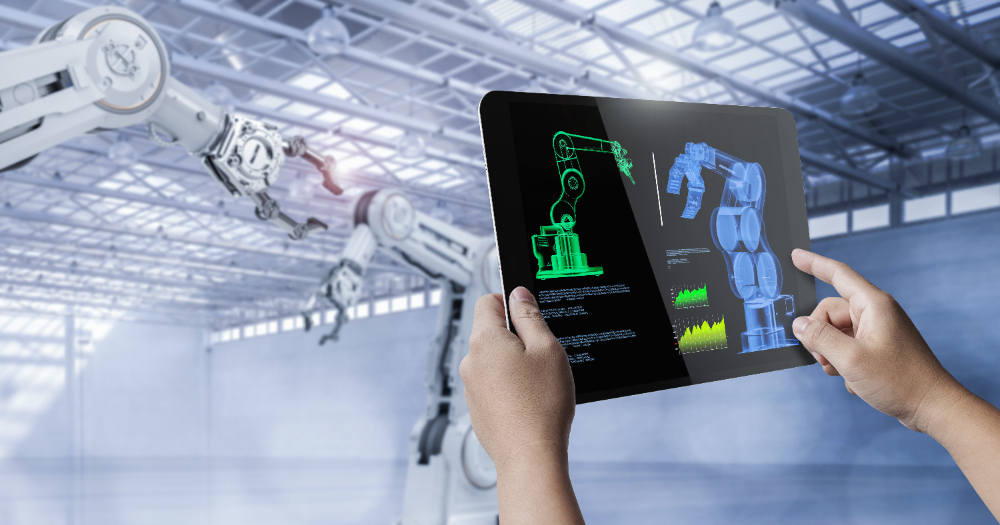
– Advanced Machine Learning capabilities enable predictive maintenance of machinery. By continuously monitoring process data, these solutions can detect potential faults and implement automated interventions or signal the need for targeted maintenance.
– The integration of Big Data and advanced analytics, which allows for the strategic value of massive structured data sets to be leveraged to gain valuable insights for optimization and innovation across the entire value chain.
– The spread of the Industrial Internet of Things (IIoT) and industrial Ethernet, which enables the networking of devices and machinery with unique identifiers for integrated and automated management of production and maintenance processes.
These advanced technological solutions are key enablers of Smart Industry, fostering the implementation of more efficient, sustainable, and market-responsive manufacturing practices.